

Best Mobiles Under 20000 in India: The Ultimate Buying Guide (May 2026)

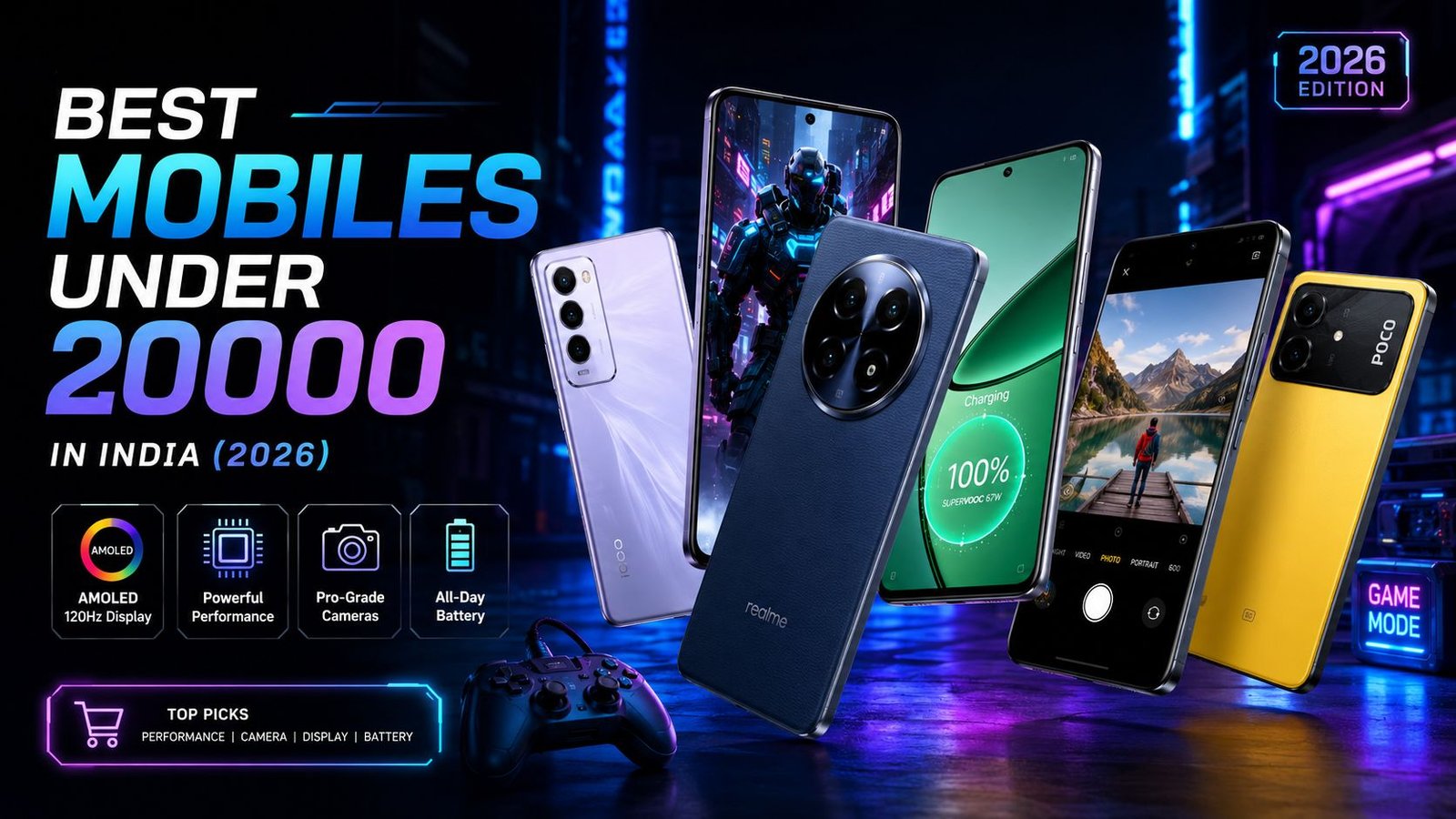
Let’s be honest. Buying a smartphone under ₹20,000 in India used to mean settling for less. You either got a phone with a great battery but a terrible camera, or a powerful processor wrapped in a cheap plastic body. But as of May 2026, the smartphone market has completely flipped. The line between expensive flagship phones and budget devices is fading fast. Today, you can easily find phones under ₹20,000 packing massive 7000mAh silicon-carbon batteries, premium curved AMOLED displays, and even dedicated optical telephoto lenses. But here is the real problem: the sheer number of options is overwhelming. Brands are flooding the market with confusing processor names, fake 144Hz refresh rate claims, and bloated 108MP cameras that actually take terrible photos. If you are feeling confused about which phone to spend your hard-earned money on, you are in the right place.
I have spent countless hours analyzing, comparing, and dissecting the latest smartphones in this price bracket.
This is not a list of generic spec sheets. This is a comprehensive, honest, and practical guide designed to help you find the absolute best phone for your specific needs, whether you are a hardcore gamer, a social media vlogger, or just someone who wants a battery that lasts two days.
Quick Recommendation Summary
In a hurry? I have categorized the top smartphones based on what they do best. Here is a quick look at the standout devices in the sub-20k segment right now.
| Mobile Name | Best For | Key Highlight | Approx Price |
| Vivo T4R 5G | Content Creators & Vlogging | 50MP Sony IMX882 with OIS & 4K Video | ₹17,499 |
| CMF Phone 2 Pro | Portrait Photography | 50MP Dedicated Optical Telephoto Lens | ₹16,999 |
| Realme P4 5G | Heavy Users & Gamers | 7000mAh Battery + 80W Fast Charging | ₹18,499 |
| Moto G67 Power 5G | Clean Software & Battery | Vegan Leather Design + 7000mAh Battery | ₹17,290 |
| Poco M8 5G | Multimedia Consumption | Curved 120Hz AMOLED (3200 nits peak) | ₹17,499 |
| iQOO Z10R | Competitive Gaming | Dimensity 7400 + Superior Thermal Cooling | ₹18,830 |
| Samsung Galaxy F36 5G | Long-Term Reliability | 6 Years of Promised OS Updates | ₹17,499 |
| Moto G96 5G | Premium Durability | IP68 Rating + Curved pOLED Display | ₹18,999 |
How We Selected These Phones
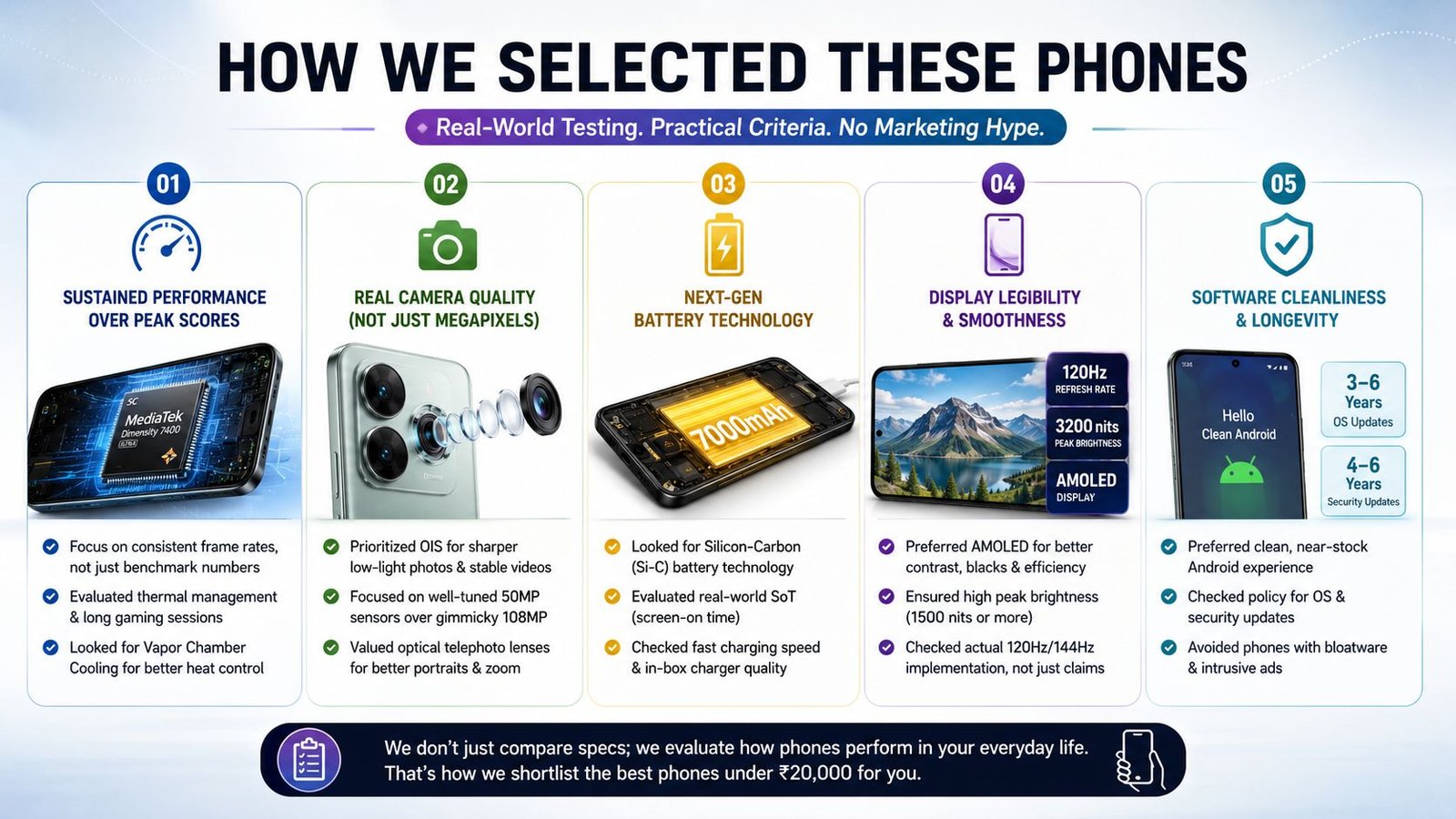
Picking the best mobiles under 20000 requires looking past the flashy marketing banners. Brands love to boast about high benchmark scores or massive megapixel numbers, but those rarely tell the whole story.
To create this list, we evaluated these devices based on strict, real-world usability criteria. Here is exactly what we looked for.
Sustained Performance Over Peak Scores
Raw AnTuTu or Geekbench scores are great for bragging rights, but they do not matter if the phone overheats after ten minutes of gaming.
We focused on sustained performance. Processors like the MediaTek Dimensity 7400 Ultra and Qualcomm Snapdragon 7s Gen 2 were evaluated on how well they maintain frame rates during long sessions without aggressive thermal throttling. We specifically looked for phones equipped with vapor chamber cooling systems, a feature that has thankfully trickled down from premium flagships.
Real Camera Quality (Not Just Megapixels)
The 108MP camera trend is largely a gimmick. A poorly optimized 108MP sensor will always lose to a well-tuned 50MP sensor. We prioritized phones featuring Optical Image Stabilization (OIS), which physically moves the camera lens to compensate for hand shakes. OIS is absolutely critical for sharp low-light photos and stable video recording.
We also gave high marks to brands introducing optical telephoto lenses to this price tier, as they drastically improve portrait photography.
Next-Gen Battery Technology
Battery anxiety is a real pain point for Indian consumers. In 2026, we are witnessing a massive shift toward silicon-carbon (Si-C) battery chemistry. This new tech allows manufacturers to cram 7000mAh capacities into slim phones without turning them into heavy bricks.
We judged phones based on real-world screen-on time (SoT) and how quickly they recharge using the bundled in-box adapters.
Display Legibility and Smoothness
A 120Hz or 144Hz refresh rate is now standard, but display quality varies wildly. We favored AMOLED panels over LCDs because they offer infinite contrast ratios, deeper blacks, and better battery efficiency.
Peak brightness (measured in nits) was heavily scrutinized. You need at least 1500 nits to comfortably read your screen under the harsh Indian summer sun.
We also penalized phones that advertise 144Hz but dynamically lock most of your apps to 60Hz to save battery.
Software Cleanliness and Longevity
Your hardware is useless if the software is terrible. Budget phones are notorious for pre-installed bloatware and spammy notifications.
We gave top rankings to devices offering clean, near-stock Android experiences. Furthermore, we looked at update policies.
If a brand promises three to six years of OS and security updates, it means your phone will remain secure and functional for much longer.
Best Options Section
Let’s dive into the detailed reviews.
Here are the absolute best phones you can buy under ₹20,000 right now, complete with the good, the bad, and the practical realities of using them daily.
1. Vivo T4R 5G
The Vivo T4R 5G is a masterclass in blending premium design with exceptional camera hardware. If you create content, shoot reels, or just love taking photos, this phone offers features usually restricted to the ₹30,000+ segment.
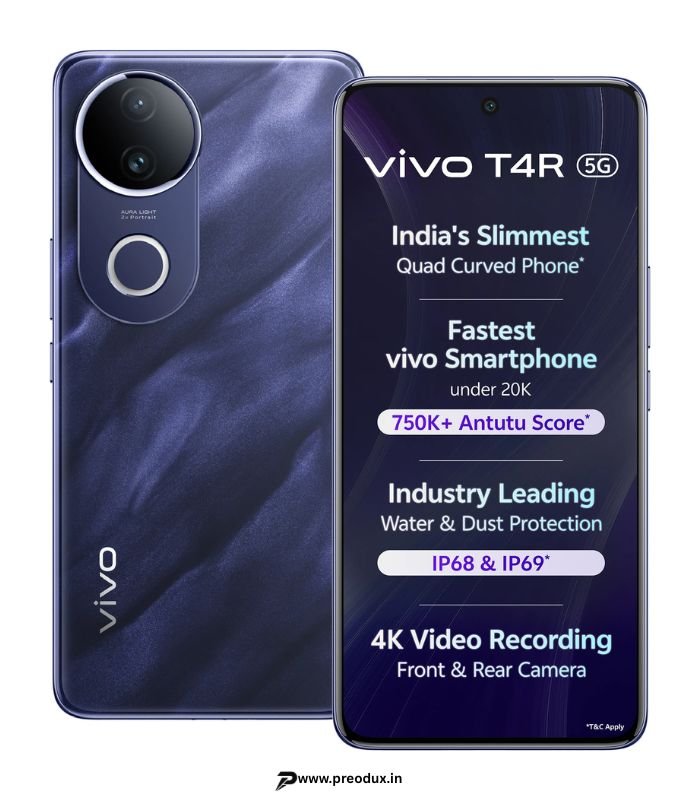
VIVO T4R 5G, Twilight Blue (8GB, 128GB) | vivo T4R 5G
Pros:
Gorgeous 120Hz quad-curved AMOLED display looks incredibly premium.
Flagship-grade 50MP Sony IMX882 main camera with OIS.
4K video recording is supported on both front and rear cameras.
Highly durable with IP68 and IP69 water/dust resistance ratings.
Surprisingly slim profile despite housing a large 5700mAh battery.
Cons:
FuntouchOS 15 comes with pre-installed bloatware that requires manual deletion.
The secondary 2MP bokeh lens is mostly useless.
Lacks a dedicated ultra-wide-angle camera.
No 3.5mm headphone jack or expandable storage.
Best For:
Vloggers, Instagram creators, and anyone who prioritizes a slim, beautiful design alongside highly stabilized video recording.
Key Specifications:
Feature | Specification |
| Processor | MediaTek Dimensity 7400 (4nm) |
| Display | 6.77-inch Quad-Curved AMOLED, 120Hz, 1800 nits peak |
| Camera | 50MP (Sony IMX882, OIS) + 2MP Bokeh |
| Battery | 5700mAh |
| Charging | 44W Fast Charging |
| Storage | 128GB / 256GB UFS |
| RAM | 8GB / 12GB |
| Software | FuntouchOS 15 (Android 15) |
Real World Experience:
Using the Vivo T4R 5G feels incredibly fluid. The Dimensity 7400 processor handles app switching and multitasking without breaking a sweat. You can play heavy games like BGMI on high settings, though it does get slightly warm after an hour. But the real magic is the camera. The Sony IMX882 sensor combined with OIS takes razor-sharp photos in daylight and significantly reduces blur at night.
If you like shooting videos while walking, the stabilization on this phone is remarkably smooth. The 5700mAh battery comfortably gets you through a full day of heavy camera use, and the 44W charger tops it up efficiently.
Why We Recommend It:
Finding a flagship-tier curved display, IP69 durability, and a genuine Sony OIS camera under ₹20,000 is rare. It disrupts the budget segment perfectly.
2. CMF by Nothing Phone 2 Pro
The CMF Phone 2 Pro is a breath of fresh air. It ditches the overly aggressive, gamified looks of budget phones for a sleek, minimalist industrial design. It focuses purely on clean software and segment-disrupting camera hardware.
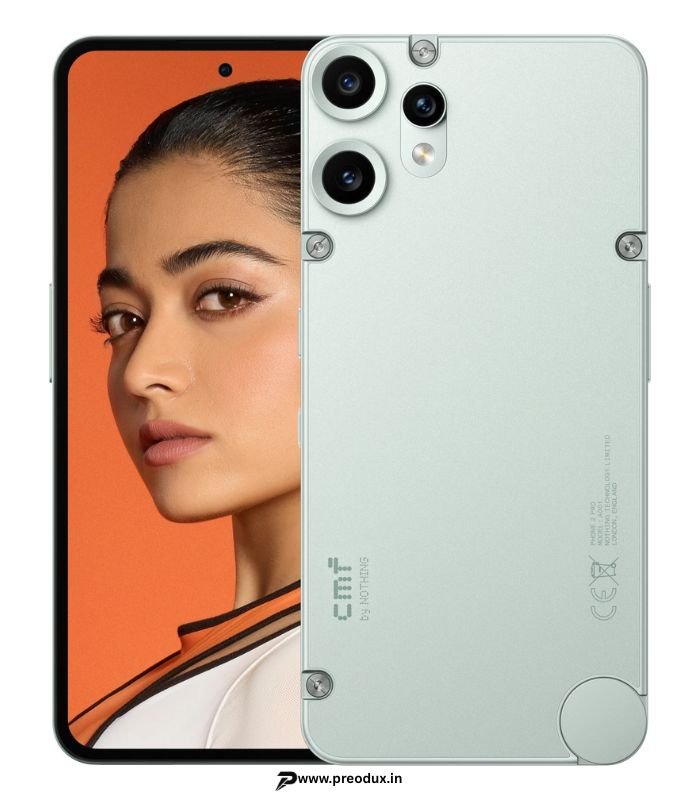
CMF Phone 2 Pro 5G (Light Green, 8GB RAM, 128GB Storage)
Pros:
Features a segment-first 50MP dedicated optical telephoto lens.
Nothing OS 3.2 offers a completely bloat-free, clean experience.
Brilliant OLED screen reaching an insane 3000 nits peak brightness.
Minimalist design with unique interchangeable rear accessories.
Great thermal management for casual gaming.
Cons:
Complete lack of Optical Image Stabilization (OIS) across all lenses.
Subpar down-firing mono speaker ruins the multimedia experience.
Only has a basic IP54 rating, falling behind competitors.
33W charging speed is noticeably slow for this price segment.
Best For:
Photography purists who want true optical zoom, users who hate bloatware, and people who love minimalist aesthetics.
Key Specifications:
| Feature | Specification |
| Processor | MediaTek Dimensity 7300 Pro |
| Display | 6.77-inch FHD+ AMOLED, 120Hz, 3000 nits peak |
| Camera | 50MP Main + 50MP Telephoto (2x Optical) + 8MP Ultrawide |
| Battery | 5000mAh |
| Charging | 33W Fast Charging |
| Storage | 128GB / 256GB UFS 2.2 |
| RAM | 8GB |
| Software | Nothing OS 3.2 (Android 15) |
Real World Experience:
The everyday experience on this phone is defined by its software. Nothing OS 3.2 is beautifully monochromatic and completely free of third-party junk apps, making the phone feel lightning fast. The Dimensity 7300 Pro processor is stable and handles daily tasks flawlessly.
The 50MP telephoto lens is a massive win, capturing natural-looking portraits with real optical compression. However, because it lacks OIS, you have to hold your hands incredibly still in low-light, or your photos will come out blurry. Battery life gives you about 6 to 7 hours of screen-on time, but waiting over an hour for the 33W charger to hit 100% is slightly annoying.
Why We Recommend It:
Getting a functional 2x optical telephoto lens at this price is almost unheard of. Combined with the best Android skin in the budget market, this is a top-tier choice for portrait lovers.
3. Realme P4 5G
The Realme P4 5G is a brute-force powerhouse built for heavy users. It directly tackles the two biggest complaints people have with smartphones: battery anxiety and poor outdoor screen visibility.
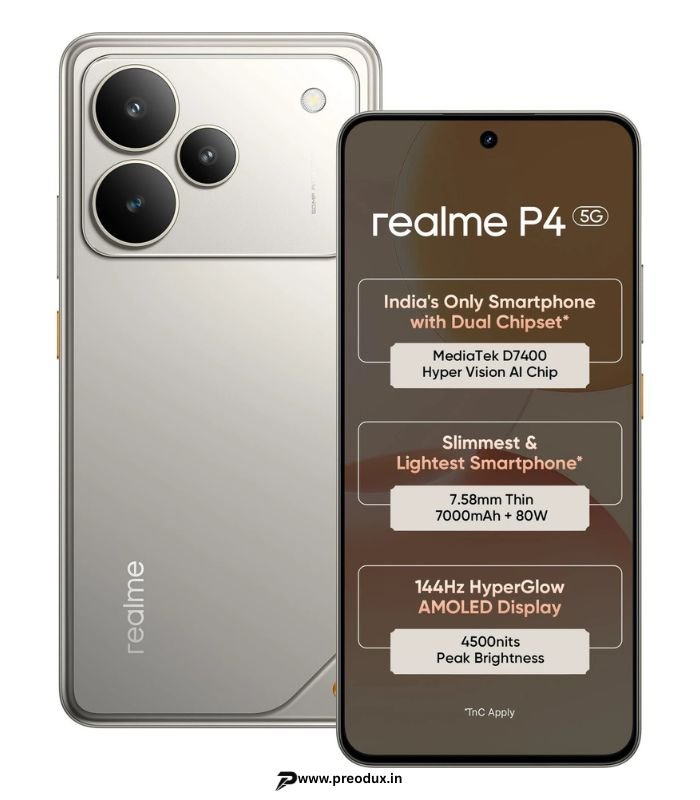
realme P4 5G (Steel Grey, 6GB RAM, 128GB Storage) | 6.77″ 144Hz AMOLED Display | Dimensity 7400 Ultra | 50MP OIS Camera | 7000mAh Battery, 80W Fast Charging | Android 15 5G Smartphone
Pros:
Monumental 7000mAh battery offers true multi-day endurance.
Lightning-fast 80W wired charging reduces downtime to minutes.
Buttery smooth 144Hz AMOLED display with 4500 nits peak brightness.
Fast UFS 3.1 storage ensures apps and games load instantly.
Dimensity 7400 Ultra processor handles heavy gaming with ease.
Cons:
Realme's claims of "dual-chip" processing feel like a marketing gimmick.
Audio distorts noticeably when pushed to maximum volume.
Realme UI comes cluttered with pre-installed bloatware.
Camera setup lacks a dedicated telephoto lens.
Best For:
Hardcore gamers, delivery executives, travelers, and anyone who needs a phone that simply refuses to die during a long day.
Key Specifications:
| Feature | Specification |
| Processor | MediaTek Dimensity 7400 Ultra |
| Display | 6.77-inch FHD+ AMOLED, 144Hz, 4500 nits peak |
| Camera | 50MP Main + 8MP Ultrawide |
| Battery | 7000mAh |
| Charging | 80W Fast Charging |
| Storage | 128GB UFS 3.1 |
| RAM | 6GB LPDDR4X |
| Software | Realme UI (Android) |
Real World Experience:
This phone is an absolute endurance champion. Even if you are using GPS navigation, 5G data, and playing games, the 7000mAh battery easily stretches across two full days. When the battery finally dips, the 80W charger juices it back up astonishingly fast, which is a massive advantage over other big-battery phones.
The 144Hz screen is fluid and incredibly bright, making it perfectly readable even under direct midday sunlight. Thanks to the faster UFS 3.1 storage, heavy games like Call of Duty load rapidly, and the phone maintains solid frame rates without overheating. The camera is decent for social media, but it tends to oversaturate colors.
Why We Recommend It:
It is incredibly rare to find a 7000mAh battery, 80W charging, and a 144Hz AMOLED screen all in one package. It is the ultimate utilitarian workhorse.
4. Motorola Moto G67 Power 5G
Motorola continues to deliver immense value. The Moto G67 Power 5G brings next-gen battery tech and a premium vegan leather finish to the budget segment, making it feel much more expensive than it actually is.
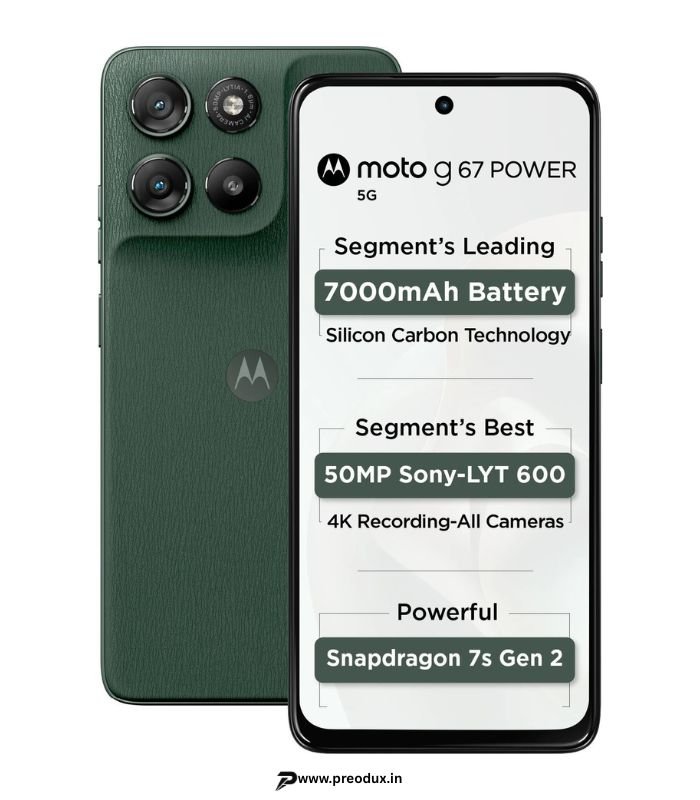
Motorola G67 Power 5G (Pantone Cilantro, 8GB RAM, 128GB Storage) | 6.7″ FHD+ 120Hz LCD Display | Snapdragon 7s Gen2 Processor | 50MP + 8MP UW Camera | 7000mAh Battery with 30W Charger | IP64
Pros:
Premium vegan-leather back panel offers great grip and style.
Massive 7000mAh silicon-carbon battery guarantees two-day life.
IP64 dust and water resistance provides peace of mind.
Clean, ad-free Android 15 (Hello UI) out of the box.
Retains the beloved 3.5mm headphone jack and stereo speakers.
Cons:
Disappointing software policy with only 1 guaranteed major OS update.
LCD display struggles with brightness in direct sunlight.
No microSD card slot for expanding storage.
The 8MP ultra-wide camera takes very poor, soft photos.
Best For:
Users who want a clean, stock Android interface, need massive battery backup, and prefer a durable, stylish design over extreme gaming performance.
Key Specifications:
| Feature | Specification |
| Processor | Qualcomm Snapdragon 7s Gen 2 |
| Display | 6.70-inch FHD+ LTPS LCD, 120Hz |
| Camera | 50MP Main + 8MP Ultrawide |
| Battery | 7000mAh (Silicon-Carbon) |
| Charging | 30W Wired Charging |
| Storage | 128GB / 256GB |
| RAM | 8GB / 12GB |
| Software | Hello UI (Android 15) |
Real World Experience:
Motorola used new silicon-carbon battery technology here. This allows them to pack a huge 7000mAh capacity into a phone that is surprisingly slim and comfortable to hold. Battery life easily crosses the two-day mark. Hello UI is delightfully fast, snappy, and entirely free from the spammy notifications you get on other budget phones.
The Snapdragon 7s Gen 2 chip handles mid-level gaming well, running games at a stable 60 fps, though it stutters if pushed harder. The biggest real-world drawback is the LCD screen. It simply lacks the vibrant punch and outdoor brightness of AMOLED displays. Also, the ultra-wide camera is quite poor and mostly serves as a spec-sheet filler.
Why We Recommend It:
If you hate software bloatware and suffer from battery anxiety, this is a breath of fresh air. It is highly reliable and looks fantastic.
5. Poco M8 5G
The Poco M8 5G is built for people who consume a lot of media. By prioritizing a stunning curved display and a sleek body, it aims to give budget buyers a true flagship aesthetic.
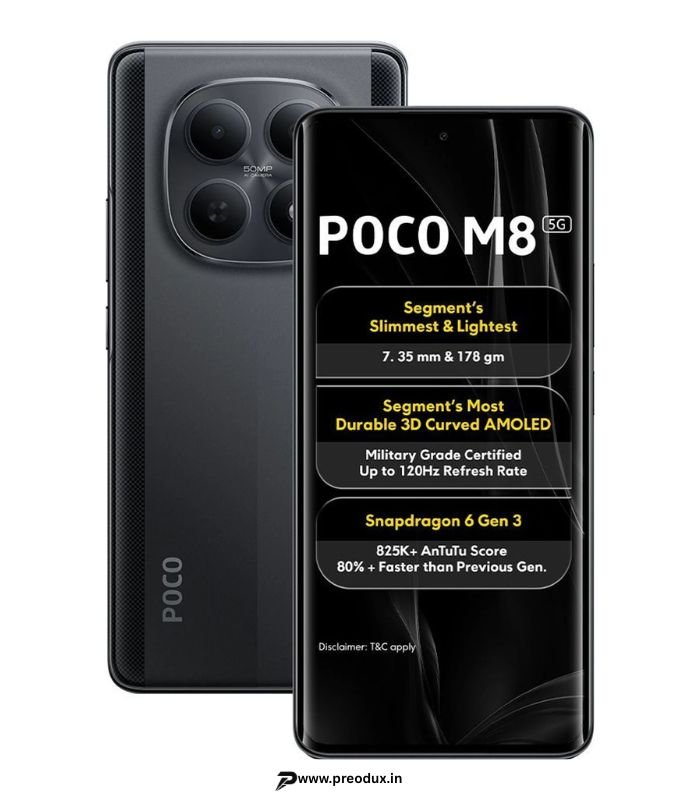
Poco M8 5G Carbon Black 6GB RAM 128GB ROM
Pros:
Gorgeous 6.77-inch curved AMOLED display with 3200 nits peak brightness.
Extremely slim and lightweight design with a premium in-hand feel.
Outstanding software promise: 4 major OS updates and 6 years of security patches.
Solid all-day 5520mAh battery with fast 45W charging.
Excellent daylight photography from the main camera.
Cons:
The Snapdragon 6 Gen 3 chipset is older and struggles with heavy gaming.
HyperOS 2 comes loaded with a heavy amount of pre-installed bloatware.
Completely lacks an ultra-wide-angle camera.
Missing HDR support for streaming platforms like Netflix.
Best For:
Multimedia consumers, style-conscious buyers who love curved screens, and people who want to keep their phone for 5+ years safely.
Key Specifications:
| Feature | Specification |
| Processor | Qualcomm Snapdragon 6 Gen 3 |
| Display | 6.77-inch Curved FHD+ AMOLED, 120Hz, 3200 nits peak |
| Camera | 50MP Main + 2MP Depth |
| Battery | 5520mAh |
| Charging | 45W Fast Charging |
| Storage | 128GB / 256GB UFS 2.2 |
| RAM | 6GB / 8GB |
| Software | HyperOS 2 (Android 15) |
Real World Experience:
Holding the Poco M8 5G is a joy; the curved edges and slim profile make it feel twice as expensive as it is. The display produces deep, rich blacks and vibrant colors, making movies look great, even though it sadly lacks official HDR streaming support. Everyday navigation is smooth, but the older Snapdragon 6 Gen 3 shows its limits quickly. If you try to play demanding games, you will experience dropped frames and lag.
The 50MP camera takes great, punchy photos in bright sunlight, but low-light shots can be quite noisy. You will also need to spend 15 minutes uninstalling junk apps when you first set up the phone. However, the battery easily survives a full day of scrolling.
Why We Recommend It:
It sacrifices raw gaming power for style and display quality. Combined with an incredible 6-year security update policy, it is a fantastic, long-lasting investment for casual users.
6. iQOO Z10R
The iQOO Z10R is unapologetically designed for performance. If you want the absolute highest frame rates and best gaming experience on a strict budget, this is your default choice.
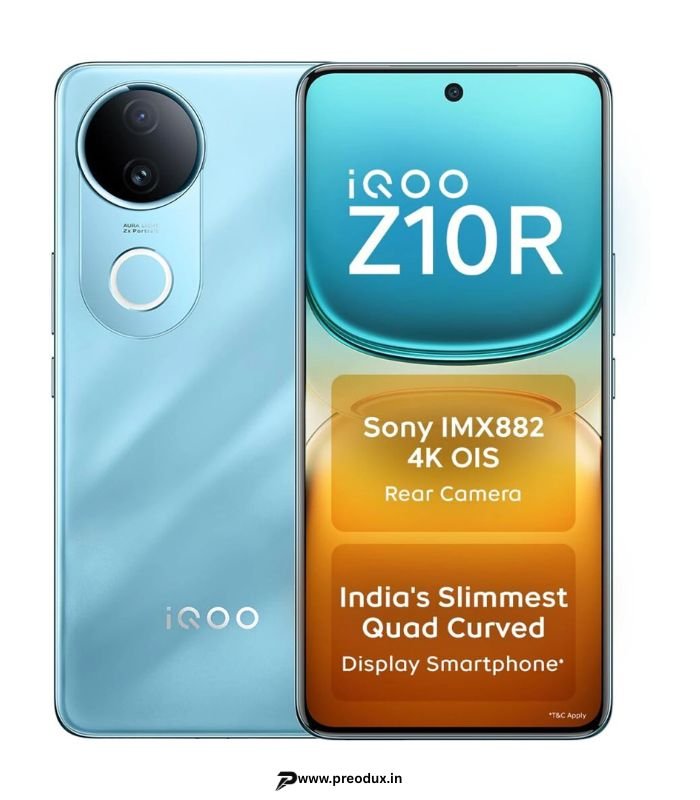
iQOO Z10R 5G (Aquamarine, 8GB RAM, 128GB Storage) | 32MP 4K Selfie Camera | Quad-Curved AMOLED Display | Dimensity 7400 Processor with 750K+ AnTuTu
Pros:
Best-in-class gaming performance via the Dimensity 7400 chipset.
Superior thermal cooling ensures the phone does not overheat during long sessions.
Highly stabilized 50MP main camera with OIS.
Large 5700mAh battery paired with rapid 44W charging.
Fast, responsive display with excellent touch sampling.
Cons:
Funtouch OS includes a fair amount of pre-installed bloatware.
The physical design is very plain and slightly boring.
The secondary 2MP camera is just a useless depth sensor.
Best For:
Competitive mobile gamers, performance enthusiasts, and users who hate it when their phone overheats.
Key Specifications:
| Feature | Specification |
| Processor | MediaTek Dimensity 7400 |
| Display | FHD+ AMOLED, 120Hz |
| Camera | 50MP (OIS) + 2MP Depth |
| Battery | 5700mAh |
| Charging | 44W Fast Charging |
| Storage | 128GB / 256GB |
| RAM | 8GB |
| Software | Funtouch OS (Android) |
Real World Experience:
When you push this phone to its limits, it thrives. Thanks to iQOO's aggressive software optimization and massive vapor chamber cooling, games like BGMI run at consistently high frame rates without burning your hands. Usually, gaming phones neglect cameras, but the Z10R features a 50MP sensor with OIS.
This means you actually get sharp, bright photos even in dim indoor lighting. The 5700mAh battery provides a thick buffer so you don't have to hug a wall outlet while gaming, and the 44W charger minimizes your downtime.
Why We Recommend It:
It perfectly bridges the gap between a gaming powerhouse and a reliable daily driver. Top-tier thermal management makes this a winner.
7. Samsung Galaxy F36 5G
Samsung’s Galaxy F36 5G is for buyers who prioritize brand reliability, software security, and a dependable camera ecosystem over aggressive, spec-heavy hardware.
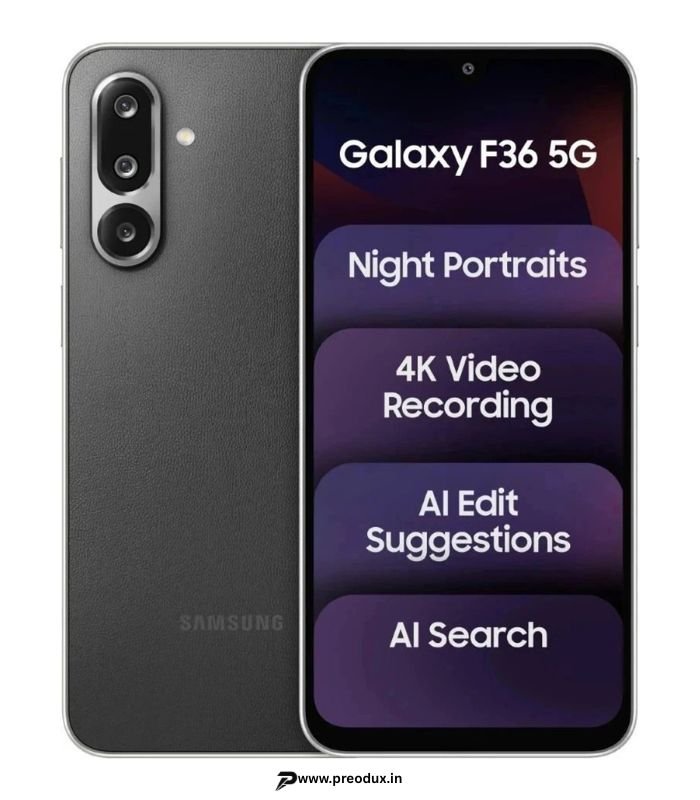
Samsung Galaxy F36 5G (Black, 128 GB) (6 GB RAM)
Pros:
Vibrant 120Hz AMOLED display is perfect for media consumption.
Reliable 50MP main camera backed by Optical Image Stabilization (OIS).
Industry-leading commitment of 6 years of OS updates.
Premium-looking matte back design resists fingerprints.
Highly refined, secure, and feature-rich One UI software.
Cons:
Exynos 1380 processor feels sluggish compared to Snapdragon rivals.
The outdated U-shaped notch on the display looks cheap for 2026.
Single mono speaker lacks audio depth and loudness.
Charging speeds are slow at 25W, and the charger is often not included.
Best For:
Brand-conscious buyers, older users who want a simple interface, and people planning to use the same phone for 4 to 5 years.
Key Specifications:
| Feature | Specification |
| Processor | Samsung Exynos 1380 |
| Display | 6.65-inch FHD+ AMOLED, 120Hz |
| Camera | 50MP (OIS) + 8MP Ultrawide + 2MP Macro |
| Battery | 5000mAh |
| Charging | 25W Charging |
| Storage | 128GB UFS 2.2 |
| RAM | 6GB |
| Software | One UI (Android) |
Real World Experience:
The polished software experience is the main selling point here. One UI is intuitive, highly secure (Knox security), and integrates seamlessly if you own a Samsung watch or earbuds. The AMOLED display is vivid, making YouTube highly enjoyable, though the single speaker ruins the audio immersion.
Camera performance is highly reliable; the OIS on the 50MP sensor ensures crisp daylight photos and helps salvage low-light memories. However, the Exynos 1380 chipset is a major bottleneck. It handles basic tasks fine, but it struggles with heavy multitasking, often exhibiting UI lag. The 5000mAh battery lasts a full day, but you will need patience for the 25W charging.
Why We Recommend It:
If you do not play games, but you want a trusted brand with a fantastic display and the absolute best software update policy on the market, this is a very safe buy.
8. Moto G96 5G
The Moto G96 5G brings premium flagship durability into the budget tier. It is one of the very few phones under 20k to offer proper water resistance alongside a beautiful curved screen.
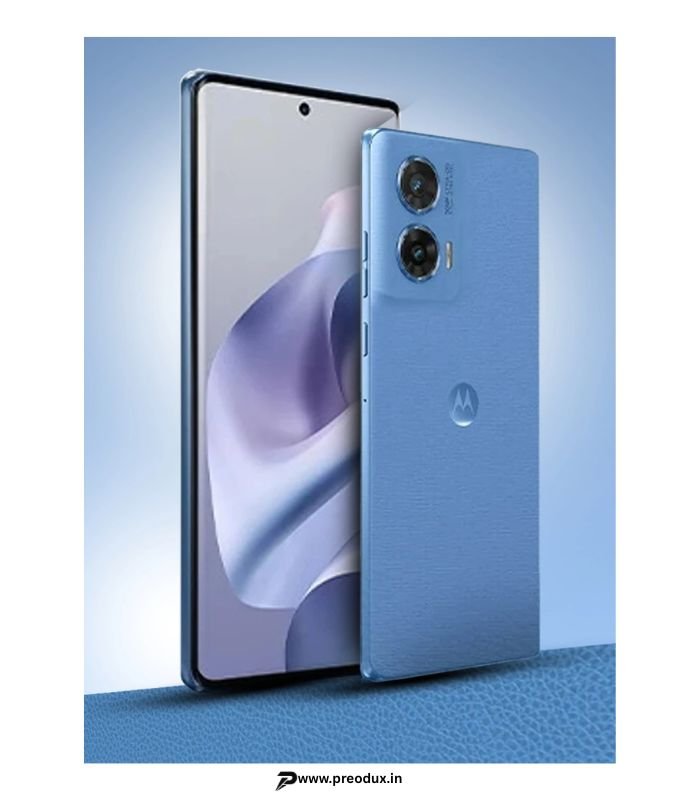
Pros:
Incredible IP68 dust and water resistance (rare in this segment).
Beautiful 144Hz curved pOLED display with excellent colors.
Smooth, ad-free Hello UI software experience.
Solid daily performance from the Snapdragon 7s Gen 2 chip.
Large 5500mAh battery despite the slim design.
Cons:
Disappointing software policy: only 1 year of OS updates promised.
The 8MP ultra-wide camera takes very soft, poor photos.
Low-light selfies are heavily degraded.
No expandable microSD storage.
Best For:
Clumsy users, people who work outdoors or near water, and buyers who want a premium curved display with a clean software interface.
Key Specifications:
| Feature | Specification |
| Processor | Qualcomm Snapdragon 7s Gen 2 |
| Display | 6.67-inch Curved pOLED, 144Hz |
| Camera | 50MP Main + 8MP Ultrawide |
| Battery | 5500mAh |
| Charging | 33W Fast Charging |
| Storage | 128GB / 256GB |
| RAM | 8GB |
| Software | Hello UI (Android 15) |
Real World Experience:
The IP68 rating is the star of the show. You can literally drop this phone in a bucket of water and it will survive, which gives incredible peace of mind. The curved pOLED screen is stunning, and the 144Hz refresh rate makes scrolling through Hello UI feel buttery smooth. The Snapdragon 7s Gen 2 handles daily tasks and medium-level gaming without any noticeable heating.
Daylight photos from the 50MP main sensor are great, but just like the G67 Power, the ultra-wide lens is terrible and low-light selfies are blurry. Battery life easily clears a full day of heavy use, and the 33W charger gets the job done in just over an hour. The biggest flaw is knowing you will only get one major Android update.
Why We Recommend It:
For the peace of mind that comes with IP68 water resistance and a bloat-free UI, the Moto G96 is a fantastic, durable choice.
Comparison Section
Need to make a quick decision based on your specific needs? Here are the category winners.
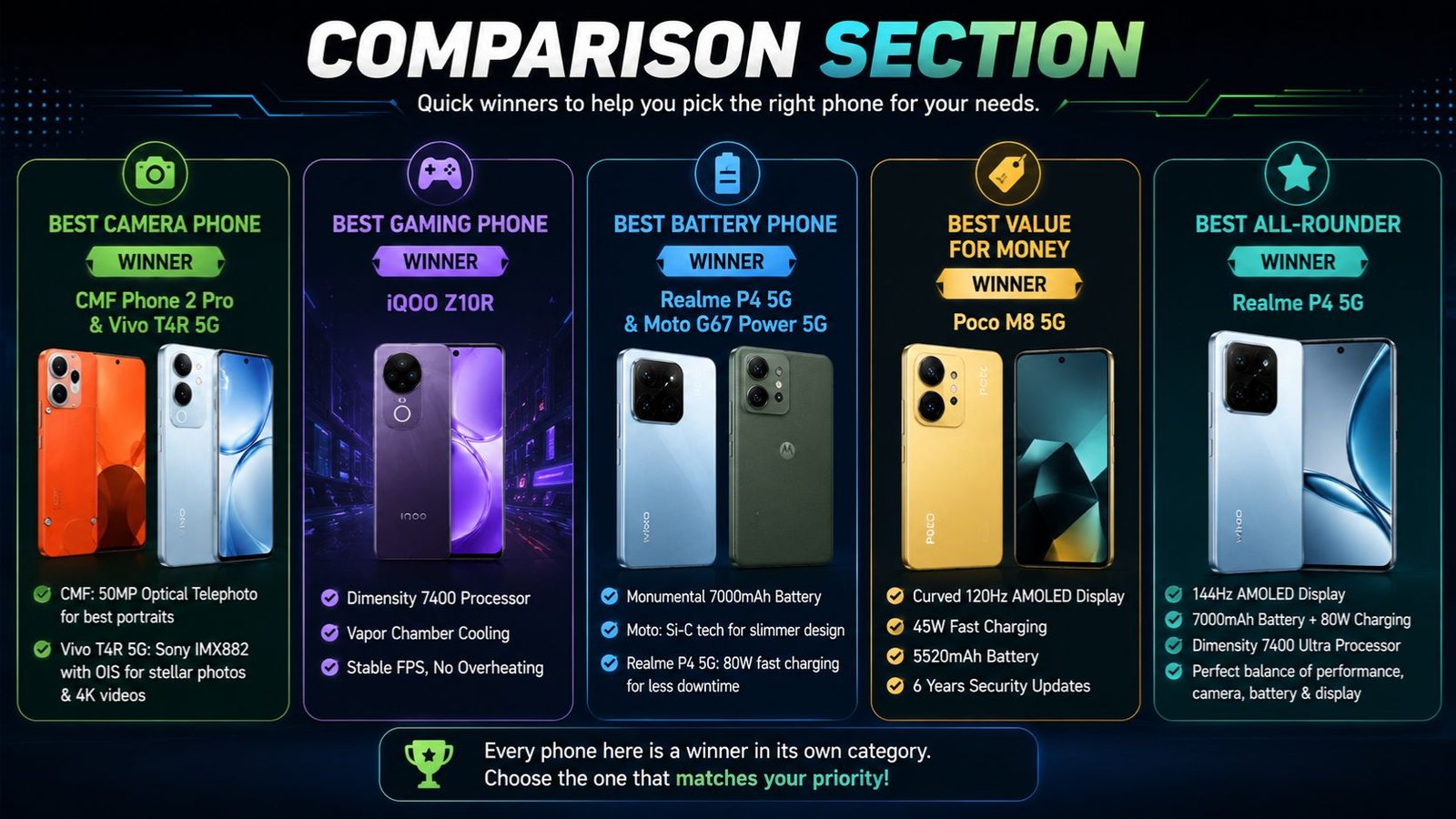
Best Camera Phone
Winner: CMF Phone 2 Pro & Vivo T4R 5G For portrait photography, the CMF Phone 2 Pro is unmatched due to its dedicated 50MP optical telephoto lens. If you care more about video recording, vlogging, and low-light stability, the Vivo T4R 5G with its Sony IMX882 sensor and OIS is the absolute best.
Best Gaming Phone
Winner: iQOO Z10R With superior thermal vapor chamber cooling, the Dimensity 7400 processor, and aggressive performance tuning, the iQOO Z10R maintains the most stable frame rates during long gaming sessions without overheating.
Best Battery Phone
Winner: Realme P4 5G & Moto G67 Power 5G Both pack monumental 7000mAh batteries. The Moto G67 Power uses silicon-carbon tech for a slimmer profile. However, the Realme P4 5G edges ahead because its lightning-fast 80W charging drastically reduces downtime.
Best Value for Money
Winner: Poco M8 5G Offering a premium curved AMOLED display, 45W charging, a large 5520mAh battery, and a groundbreaking 6 years of security updates, it delivers exceptional longevity for the price.
Best All-Rounder
Winner: Realme P4 5G Balancing a 144Hz AMOLED screen, a 7000mAh battery, 80W charging, and a capable Dimensity 7400 Ultra processor, it sacrifices very little while giving you maximum utility.
Buying Guide Section: How to Choose the Right Phone
Navigating the smartphone market is full of marketing traps. Brands will use big numbers to confuse you. Here is exactly what you need to check before handing over your money, and what specs actually matter in 2026.
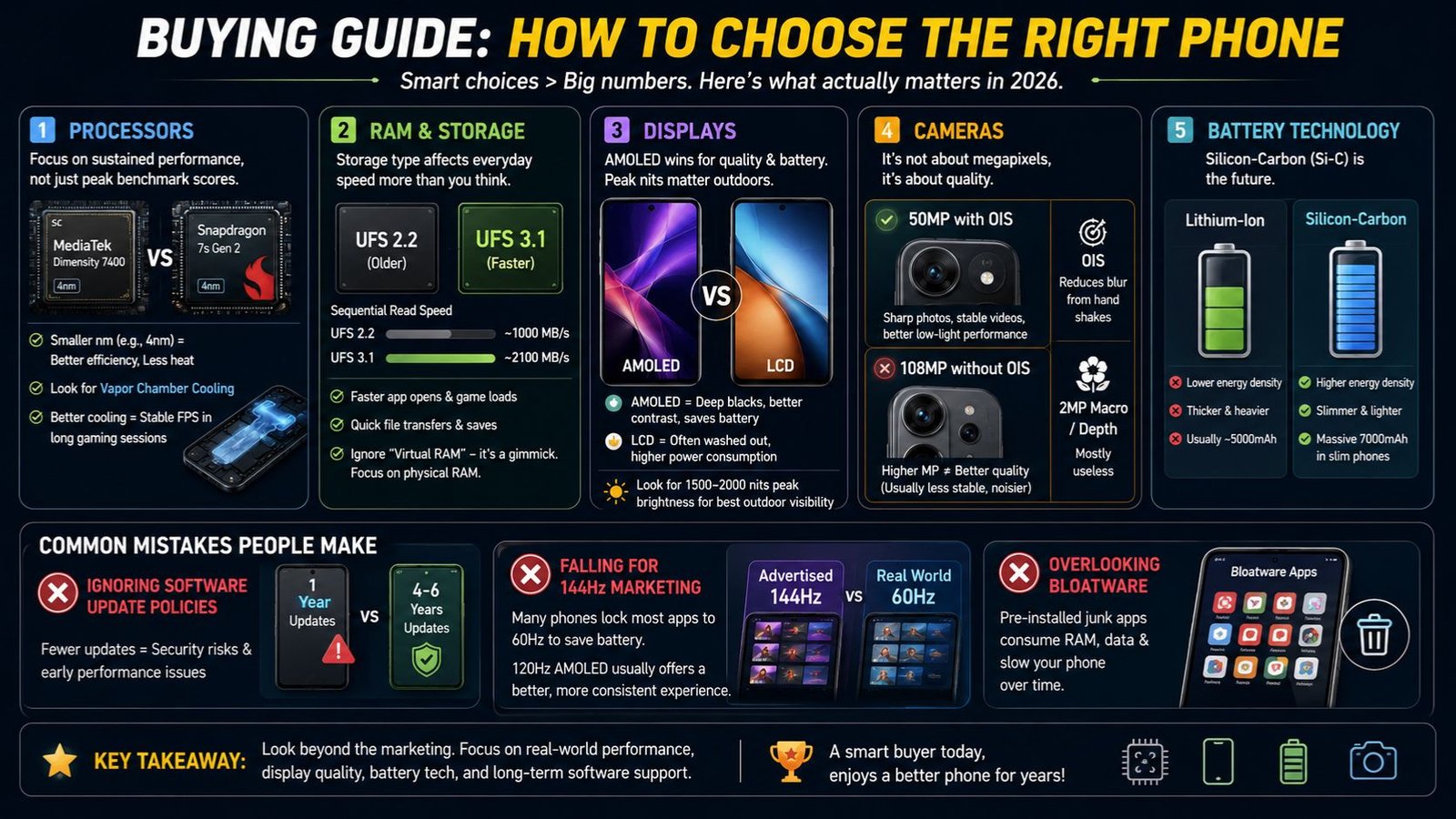
1. Processors: Understanding Sustained Performance
A processor’s name can be misleading.
Look at the fabrication process (measured in nanometers, e.g., 4nm).
A smaller nanometer number generally means the chip is more power-efficient and generates less heat.
More importantly, do not buy a phone based purely on peak benchmark scores.
Look for phones that advertise "Vapor Chamber Cooling."
A phone that scores slightly lower but has great cooling will perform much better during a 45-minute BGMI session than a higher-scoring phone that overheats and throttles its speed.
2. RAM and Storage: The Secret Bottleneck
Having 8GB of RAM is standard now, but the type of storage matters far more for daily speed.
You will see terms like UFS 2.2 and UFS 3.1.
UFS 3.1 is significantly faster.
It dictates how quickly your apps open, how fast games load, and how rapidly photos save to your gallery.
Buyers looking for a fast, snappy phone should actively seek out UFS 3.1 storage (found in the Realme P4x and Vivo T4x series) over the older UFS 2.2 standard.
Also, ignore "Virtual RAM" marketing. It uses your slower storage to act as RAM and is mostly a gimmick. Focus on physical RAM.
3. Displays: AMOLED vs LCD and Peak Nits
AMOLED panels turn off individual pixels to create perfect, deep blacks.
This leads to better contrast for watching movies and saves battery when you use dark mode.
LCD panels, even if they advertise a faster 144Hz refresh rate, will often look washed out in comparison.
Furthermore, peak brightness is crucial in India.
Look for devices offering at least 1500 to 2000 nits of peak brightness. Anything lower, and you will struggle to read your WhatsApp messages outdoors in the sun.
4. Cameras: The Megapixel Myth
A 108MP camera is not automatically better than a 50MP camera.
Image quality relies on the physical size of the sensor and the Image Signal Processor (ISP) inside your phone's chip.
The most important feature to look for is Optical Image Stabilization (OIS).
OIS physically moves the camera lens inside the phone to counteract your hand shaking.
This is critical for sharp night photos and smooth video recording. Always prioritize a 50MP camera with OIS over a 108MP camera without it.
Finally, ignore 2MP macro or depth sensors. Brands only include them so they can print "Triple Camera" on the box. They are useless.
5. Battery Chemistries: The Silicon-Carbon Revolution
In 2026, standard Lithium-Ion batteries are being replaced by Silicon-Carbon (Si-C) batteries.
Si-C technology has a much higher energy density.
This allows manufacturers to pack massive 7000mAh capacities into phones that previously could only hold 5000mAh, without making the phone thicker or heavier (as seen in the Moto G67 Power).
If you want a big battery but hate heavy phones, look for Si-C tech.
Common Mistakes People Make
Ignoring software update policies: A phone becomes a security risk if it stops receiving updates. Avoid phones that only promise 1 year of updates (like the Moto G67 Power) if you plan to use it for 3+ years.
Falling for 144Hz marketing: Some phones heavily advertise 144Hz, but their software locks 95% of your apps to 60Hz to save battery. 120Hz AMOLED is usually a better, more consistent experience.
Overlooking bloatware: Phones with heavy bloatware (pre-installed junk apps) will slow down over time as those apps consume background RAM and data.
FAQs
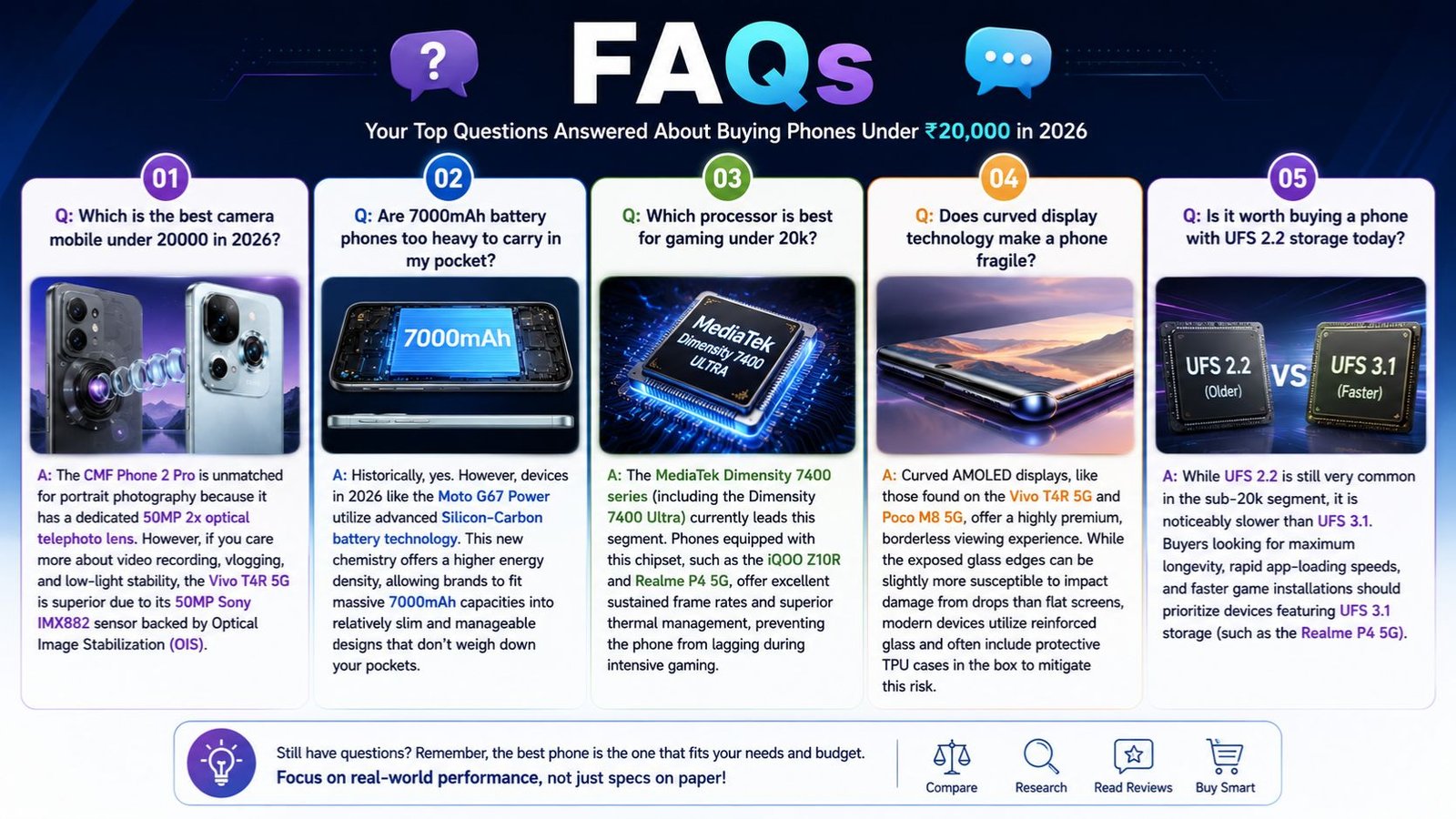
Q: Which is the best camera mobile under 20000 in 2026?
A: The CMF Phone 2 Pro is unmatched for portrait photography because it has a dedicated 50MP 2x optical telephoto lens. However, if you care more about video recording, vlogging, and low-light stability, the Vivo T4R 5G is superior due to its 50MP Sony IMX882 sensor backed by Optical Image Stabilization (OIS).
Q: Are 7000mAh battery phones too heavy to carry in my pocket?
A: Historically, yes. However, devices in 2026 like the Moto G67 Power utilize advanced Silicon-Carbon battery technology. This new chemistry offers a higher energy density, allowing brands to fit massive 7000mAh capacities into relatively slim and manageable designs that don't weigh down your pockets.
Q: Which processor is best for gaming under 20k?
A: The MediaTek Dimensity 7400 series (including the Dimensity 7400 Ultra) currently leads this segment. Phones equipped with this chipset, such as the iQOO Z10R and Realme P4 5G, offer excellent sustained frame rates and superior thermal management, preventing the phone from lagging during intensive gaming.
Q: Does curved display technology make a phone fragile?
A: Curved AMOLED displays, like those found on the Vivo T4R 5G and Poco M8 5G, offer a highly premium, borderless viewing experience. While the exposed glass edges can be slightly more susceptible to impact damage from drops than flat screens, modern devices utilize reinforced glass and often include protective TPU cases in the box to mitigate this risk.
Q: Is it worth buying a phone with UFS 2.2 storage today?
A: While UFS 2.2 is still very common in the sub-20k segment, it is noticeably slower than UFS 3.1. Buyers looking for maximum longevity, rapid app-loading speeds, and faster game installations should prioritize devices featuring UFS 3.1 storage (such as the Realme P4 5G).
Final Verdict
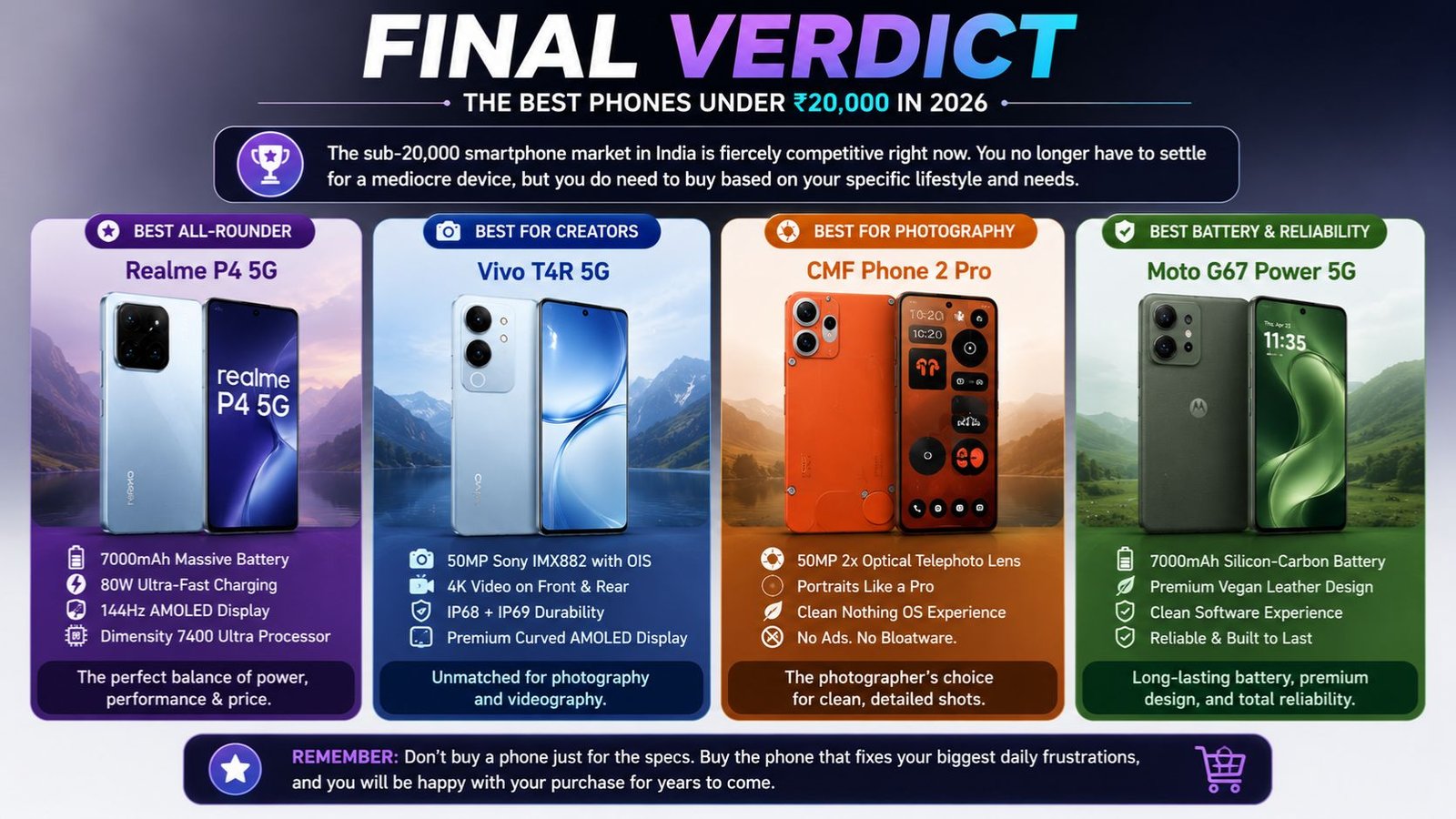
The sub-20,000 smartphone market in India is fiercely competitive right now. You no longer have to settle for a mediocre device, but you do need to buy based on your specific lifestyle.
If you are a power user, a heavy gamer, or someone who is constantly traveling, the Realme P4 5G is your absolute best bet. It pairs a massive 7000mAh battery with rapid 80W charging and a beautiful 144Hz display, making it a relentless workhorse.
If you consider yourself a content creator, you should look no further than the Vivo T4R 5G. It offers an unparalleled video and photography experience by leveraging OIS and a premium curved display.
For the photography purist who despises ads and bloatware, the CMF Phone 2 Pro stands completely alone with its true telephoto lens and ultra-clean Nothing OS.
And finally, for users demanding long-term reliability and an uncompromised battery lifespan wrapped in a stylish, durable vegan leather body, the Moto G67 Power 5G will not let you down.
Don't buy a phone just for the specs. Buy the phone that fixes your biggest daily frustrations, and you will be happy with your purchase for years to come.